
Collections
Harold Heath on Leroy Burgess
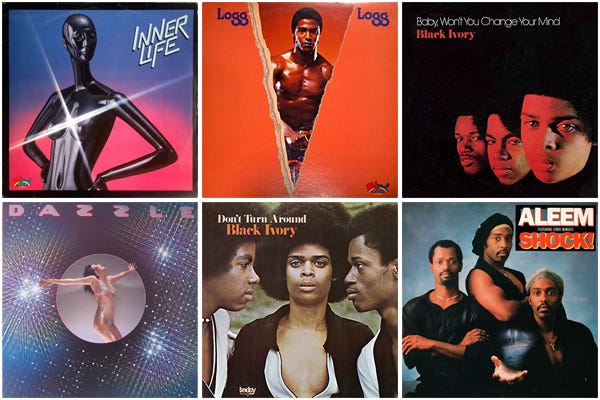
Leroy Burgess is another of music history’s backroom stars, a vocalist, multi-instrumentalist, songwriter and producer who quietly exerted a significant influence during the decade-long transition from disco to boogie to electro funk and into house music. He not only produced a gorgeous body of uplifting, dance-floor targeted songs, many of which are still DJ staples, but also played an important role in revitalising R’n’B following the commercial excesses and over-saturation of the late-disco period.
Chris Catchpole on Stiff Records
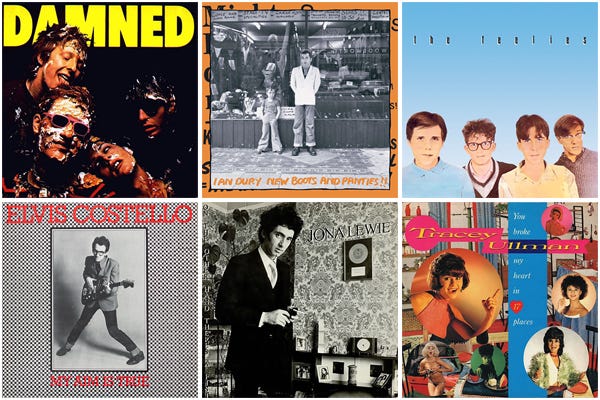
Stiff’s anarchic spirit, distinctive imagery (overseen by designer Barny Bubbles), and Robinson’s genius for marketing – jigsaws, clocks, infamous t-shirt slogans (‘If It Aint Stiff, It Aint Worth A Fuck’, ‘We Came, We Saw, We Left’) – and attention-grabbing stunts (to promote Ian Dury and the Blockheads’1979 LP Do It Yourself, Stiff representatives broke into newspaper offices and re-wallpapered them) gave it a character few labels have matched before or since.
Ned Raggett on The Fall
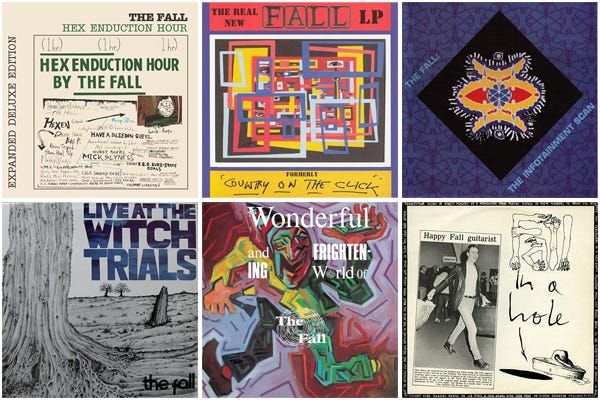
In retrospect, Mark E. Smith was best considered from at least a relative distance. Born in the northwest English community of Salford, eventually subsumed by the expansion of Manchester during the 19th century, Smith was a classic example of a striver who found a space for himself in a society that happily wrote off working class people. He did so by cofounding and then swiftly coming to lead the Fall, whose thirty-plus studio albums, many compilations, steady output of singles and innumerable live albums of varying quality and legality is a daunting but fascinating body of work.
Reviews
Nate Patrin

The Alchemist, Erykah Badu / Before the World Blows
After all this time, all that absence, all the struggles and feuds and signs of getting lost in the ether, Erykah Badu has a new album, and it’s bewildering. The idea of neo-soul’s definitive singer collabing with a hip-hop producer whose jet-set cratedigging skews towards international psychedelic obscurity as luxury good might seem like an odd fit, but this is a different kind of strangeness, and Alc’s playing on Badu’s terms in ways that fans of recent teamups like Armand Hammer’s Mercy or Freddie Gibbs’ Alfredo 2 might be surprised by.
Kenny Segal, Open Mike Eagle / Doomed!
At this point, Open Mike Eagle’s output has begun to feel less revelatory than expansive — he’s put so much of himself out there, particularly in the years since 2020’s Anime, Trauma and Divorce, that it feels like an attempt to build an autobiodiscography.
Mike D / Thank You
It took fourteen years and a lot of ruminating, but Mike D made the plunge of finally reintroducing one of the Beastie Boys’ unmistakable voices into music this year for the first time since Adam Yauch’s death in 2012. In many ways, Thank You is less a grand artistic re-entrance than a giddy, comparatively low-stakes jam sesh, an oldhead riffing with his sons’ band and cutting loose with some post-genre beat weirdness that makes like dad rock for Grand Royal-besotted Xennials.
Jeff Treppel

Sigh / Goh-Ka
Twenty-five years ago, Sigh exploded the boundaries of extreme metal on their masterpiece Imaginary Sonicscape. Mirai Kawashima and his collaborators (currently his wife, Dr. Mikannibal, and new-ish guitarist Nozomu Wakai) have explored the outer reaches of metallic weirdness on their work since then, but none of their efforts quite clicked as effectively. Goh-Ka feels like another breakthrough.
Dreadnought / Wars of Spirit // Wards of Light
Some bands have unusual inspirations for their multi-album arcs: Morbid Angel went alphabetically, Mastodon’s first few albums were based on the elements, Baroness’s on colors. Dreadnought draws their themes from the temples in The Legend of Zelda: Ocarina of Time. As silly as it may seem, their music actually makes sense in terms of Zelda games. It’s ambitious and complex, balancing between light and dark, offering an epic journey through worlds we can only imagine.
Green Lung / Necropolitan
Named after the grossest flavor of ice cream, Necropolitan offers a harrowing journey through an alternate occult London. Green Lung continue their upward trajectory with each subsequent sacrifice, and their fourth offering to the Wicker Man may be their most pleasing yet. It’s sinister in all the right ways and sexy in all the wrong ones.
Joe Muggs

Call Super / Arpo
It’s funny: back in the 90s, the Balearic aesthetic for beautiful people cavorting in Mediterranean sunshine and the experimental electronica world of computer nerds trying to make the most digital-sounding and elaborate textures possible seemed light years from one another. But to a millennial musician like Joe Seaton aka Call Super it’s entirely natural to find the highest common factors between these things: especially that both evolved in pursuit of the pleasure principle.
Asa-Chang & Junray / Hana
The title track of this EP inevitably dominates. Its loop of the gravity-defying Debussy / Bernard Herrmann echoing strings from Sade’s “Pearls” forms a bed for a post-human, post-gender intersection of voices (including that of Boredoms’s Yoshimi P-We) reciting… something? Which then in turn gets interlocked to microsecond precision with virtuoso tabla playing. It sound like nothing else on Earth, its nearly seven minutes feel like an eternity and an instant, and most people who know it will be able to tell you where they first heard it.
Bill Evans / Waltz for Debby
It’s a gentle record, one you can safely put on at dinner with just about anyone. But the minute you listen closely you don’t need to know about the remarkably intense musical and personal life that led up to the live performance which would be released as Live at the Village Vanguard and this LP, not about the tragedy that followed, to realise that it’s technically extraordinary and contains devastatingly powerful expressions of the most complicated and difficult aspects of being human in the 20th century.
Phil Freeman

Deathspell Omega / Si Monumentum Requires, Circumspice
Many metal bands – though fewer than the genre’s detractors probably think – employ Satanic iconography and lyrical imagery in their work. And of those that do, the majority take an almost cartoonish approach, celebrating the Lucifer of pop culture. French black metal band Deathspell Omega, on the other hand, takes a rigorous, probing approach to Christianity and Satanism on Si Monumentum Requires, Circumspice (translation: If You Need A Monument, Look Around).
Diamanda Galás / You Must Be Certain of the Devil
Avant-garde vocalist Diamanda Galás’s fifth album is the concluding volume in her Masque Of The Red Death trilogy which began with 1986’s The Divine Punishment and Saint Of The Pit, released in June and November 1986 respectively. The previous two albums were harrowing, theatrical settings of Old Testament scripture and French Decadent poets, respectively, but You Must Be Certain Of The Devil focuses on slightly more conventional songs, many of them rooted in gospel but with original lyrics.
Mary Lou Williams / Mary Lou Williams [Black Christ of the Andes]
The earnestness of the religious material, when placed alongside the swinging instrumental numbers, can cause mild whiplash in the listener. But Williams was a ferociously talented player, particularly in the blues idiom, and every track on here has something to recommend it.
Amelia Riggs

Lex Walton / Ultimate Love Forever
“Maybe if you stream this song enough times on your phone/it’ll pay for a drone that can take care of all of this.” Satire is dead as hell but Lex Walton knows a horse isn’t dead until you really take the time to beat it well.
Wild Pink / Still Coming Down
When one describes art as “sweaty” they’re usually referring to being able to see the amount of effort and work being put into something. Usually applied to acting, it’s a term meant to convey that you can see the strings in the performance. When it comes to Still Coming Down, the newest album by Wild Pink, I mean it literally. The whole album feels like the heat sitting on you on a muggy August day, coated in sludgy distortion, a haze that blinds you. And yet Still Coming Down is the most immediate, kick-open-the-door album in Wild Pink’s catalogue.
Lambchop / Punching the Clown
After four albums of exploring the depths of electronic experimentation, Kurt Wagner has picked up the acoustic guitar again and is singing without autotune. But like every Lambchop album, it’s not that easy, or that pandering.
mary lou williams is amazing but that CD comp you mentioned would scare away 1st time listeners ...something like the song Prism on Pablo records is a good introduction
with Ronnie Boykins bass
or there's a song called
simply "Blues",,Anybody Everybody would love that song