

Andy Beta on Blood and Fire
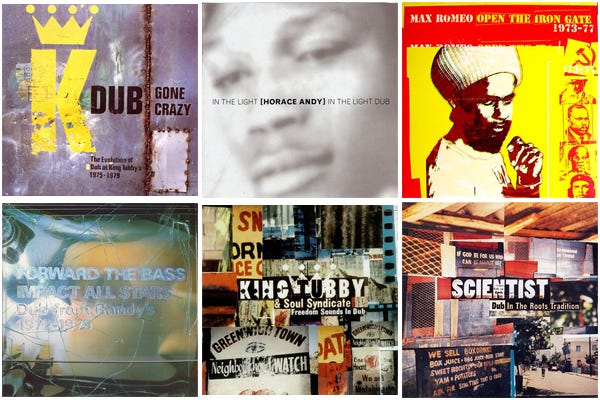
Multi-platinum rock star largesse can manifest in any number of ways –from buying a castle or yacht to owning a race horse– but for some it’s the rare chance to give back to the music that first inspired them. In the case of Simply Red’s singer Mick Hucknall, he and his manager wanted to big up the vital legacy of Jamaican music with a roots reggae reissue label. And who better to helm this endeavor than renowned British reggae writer, journalist, historiographer, and archivist, Steve Barrow? Together with another singer, Bob Harding, Barrow, Hucknall (and Hucknall’s managers Elliot Rashman and Andy Dodd) established the Blood and Fire label in 1993.
Collections
Chris Catchpole on Modern Chanson
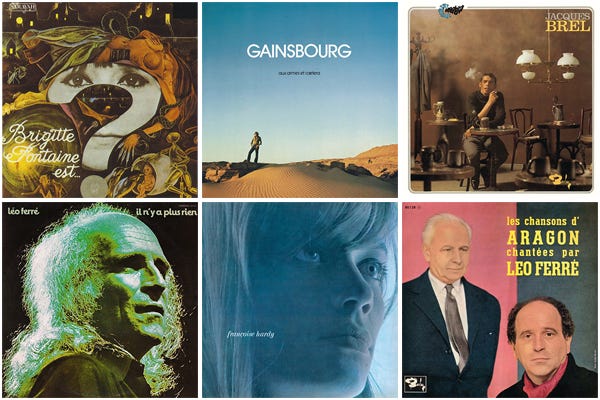
Taken literally, the word chanson translates as ‘song,’ meaning this list could feasibly go on forever. However, in the context of French popular music, chanson is a deep-rooted tradition in which lyricism, storytelling, and the phrasing and persona of the performer take centre stage ahead of any specific genre tropes or signifiers.
Ned Raggett on Kranky
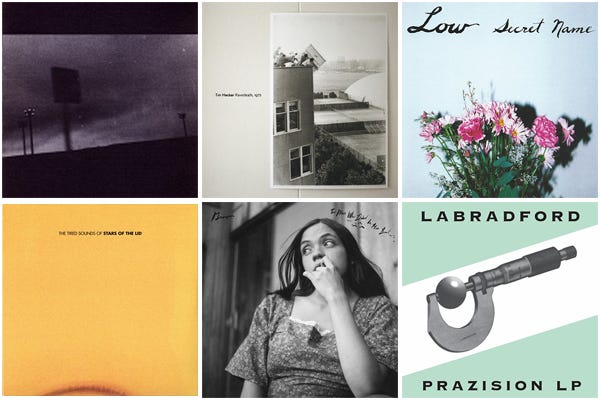
From its start with the debut album by the then-duo Labradford out of Virginia with Prazision LP, Kranky has held to a general aesthetic and creative approach that in turn has still so far ridden out everything from the crash of the 90s alternative boom and the upheaval of file sharing to the increasing amount of AI-generated slop in the artistic world and beyond.
Amelia Riggs on ’90s Country
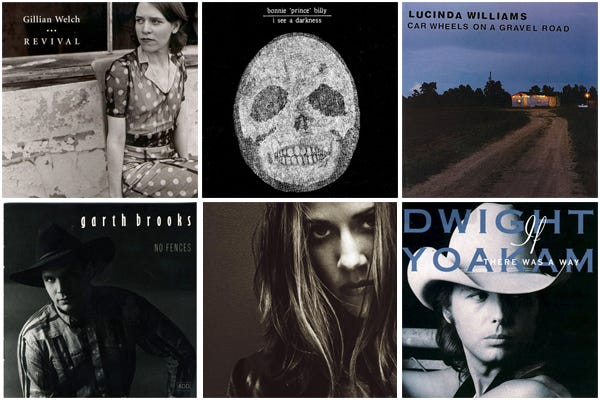
Yes, the clean production was there, cheesy keyboards and gated reverb aplenty, but existing simultaneously was the rejection of the clean; dirty and dry guitars, unadorned vocals, everything close to the mic.
Reviews
Ned Raggett

Soft Cell / Danceteria
The third album of Soft Cell’s extended 21st century reunion era sadly proved to be its last, as Dave Ball died literally a couple of days after signing off on the final mix. But Danceteria is a lovely unintended farewell, an interesting exercise in overlapping nostalgias thanks not only to his music but Marc Almond’s always dogged interest in detailing passions and pursuits in wider nightlife.
Dummy / Do You Love the Color of the Sky?
The Los Angeles-based quintet Dummy steadily made a name for itself during the 2020s as sharp purveyors of the kind of songs and styles that made the 1990s a rich time for all kinds of neo-psychedelia, shoegaze and indie-pop. 2026’s do you love the color of the sky found them extending those possibilities even further all while finding more past-in-present strands to draw on.
Helen / Linda’s Head
Liz Harris has done enough work as Grouper to fill a lifetime but also does plenty beyond that, one of which is the trio she leads called Helen. Over a decade after what seemed like was their only album, 2026 brought them back for a second in Linda’s Head, a great combination of her shadowy and intense approach mixed with the spiky drive of a solid rhythm section in bassist Scott Simmons and drummer Jed Bindeman, fellow well-travelled Portland musicians in many other fine bands.
Chris Catchpole

Cameron Winter / Live at Carnegie Hall
Accompanying himself on grand piano, Winter stands on just his songs and voice here, and on both fronts delivers a knockout. Drawing on both Geese and his superb solo LP Heavy Metal, his spellbinding performance lays bare a singular talent no amount of digital marketing could dress up, while the arrangements bring out hitherto obscured similarities to Rufus Wainwright and Laura Nyro.
Richard Hawley / Late Night Final
Sheffield singer-guitarist Richard Hawley spent much of the 90s playing in mid-level Britpop band The Longpigs before joining Pulp as a touring musician and undertaking session work for pop acts including Robbie Williams and girlgroup All Saints. When his first solo album proper landed in 2001, a reasonable reaction would have been to wonder why on earth Hawley wasted all that time playing sideman to others when he was sat on songs and a voice as good as this.
Richard Harris / A Tramp Shining
Unlike a lot of actors who have fancied a go at playing rock star over the years, Harris was helped no end by the fact that his chief collaborator on his first three albums was songwriter Jimmy Webb, who here penned a suite of impossibly lush baroque pop, fleshed out by a 35-piece orchestra, on which his friend could show off his not inconsiderable vocal talents.
Megan Iacobini de Fazio

Taresa Fernandes / I Hope You Change
There’s something intensely hypnotic about the insistent, interlocking rhythms of batuku, the centuries-old musical tradition of Cape Verde’s Santiago island. Played by groups of women, its cyclical percussion and call-and-response singing can be tender and playful one moment, raw and forceful the next.
Naya Beat Select Remixes and Reworks 2
Naya Beat may be mostly known as a reissue label, but few labels are as successful at bringing the past into real dialogue with the present. Rather than treating archival recordings as museum pieces, the LA-based imprint gives them room to evolve, building connections between generations of artists and the different dancefloors they inhabit. Select Remixes and Reworks 2 puts that approach into practice with four wonderfully eclectic, dancefloor-ready reinterpretations.
Natacha Atlas, Samy Bishai / Parallel Universe, Vol. 1
Few singers move between Arabic musical traditions and Western styles as effortlessly as Natacha Atlas. From her early days with British collective Transglobal Underground to her more recent explorations of jazz, the Belgium born Egyptian-British singer has continually pushed her music in new directions. On Parallel Universe – Volume 1, she reunites with longtime collaborator Samy Bishai, an Egyptian violinist, composer and producer, for a heady blend of Arabic pop, jazz, trip-hop and the rhythms and vocal styles of Egyptian mahraganat.
Hank Shteamer

Failure / Fantastic Planet
Failure were hardly avant-gardists of ’90s alt-rock, but Fantastic Planet — the L.A. trio’s career-defining third LP — still earns its place alongside earlier landmarks such as Nevermind, Loveless and Ritual de lo Habitual as an enduring classic of the period.
Ray Russell / Rites and Rituals
British guitarist Ray Russell’s six-decade CV encompasses everything from James Bond soundtracks to balmy mood music, but in the late ’60s and early ’70s, he made a handful of albums that with the right exposure, could have established him as a guitar vanguardist on par with better-known contemporaries such as Sonny Sharrock, John McLaughlin, Robert Fripp and Larry Coryell.
The Speaking Canaries / Songs for the Terrestrially Challenged
Even die-hard Don Caballero fans might not realize that in 1995 — the same year the Pittsburgh instrumental outfit released their widely admired 2 LP — Damon Che, the band’s jaw-dropping drum dynamo, put out another avant-rock masterpiece. As with most of the output by his lesser-known band Thee Speaking Canaries, Che doesn’t play a note of percussion of Songs for the Terrestrially Challenged.
Rick Anderson

Elvis Costello / My Aim Is True
This was the album that introduced both one of the major songwriting talents of the late 20th century and a new take on what was already coming to be called “new wave” as the influence of first-generation punk began to wane. Costello didn’t have a band of his own yet; the musicians on My Aim Is True were moonlighting from a California band called Clover, and you can almost hear their bemusement as they bring their country-rock chops to bear on snarling anti-romantic fare like “Miracle Man,” “Pay It Back,” and the truly nasty “Less Than Zero.”
Big Sandy & His Fly-Rite Boys / Feelin’ Kinda Lucky
To call Big Sandy & His Fly-Rite Boys a rockabilly band would be broadly accurate, but it misses much of what makes the group’s music so delightful. By the time they recorded this, their fifth album, they had fully integrated elements from rockabilly, honky-tonk country, Western swing, and 1950s rock’n’roll, creating a sound that was deeply and proudly old-fashioned while, at the same time, quite unique.
Ziggy Marley / Conscious Party
On Conscious Party, you hear Ziggy as the firmly established bandleader starting to move beyond the confines of old-school roots reggae while still focusing on traditional themes: African repatriation (“Dreams of Home,” complete with Nyabinghi drumming), the importance of knowing one’s cultural history (“Tomorrow People”), the futility of Babylonian politics (“Tumblin’ Down”), etc. The vocal resemblance to his father is remarkable on this album, but he is clearly carving his own path musically.