
Hank Shteamer on Math Rock
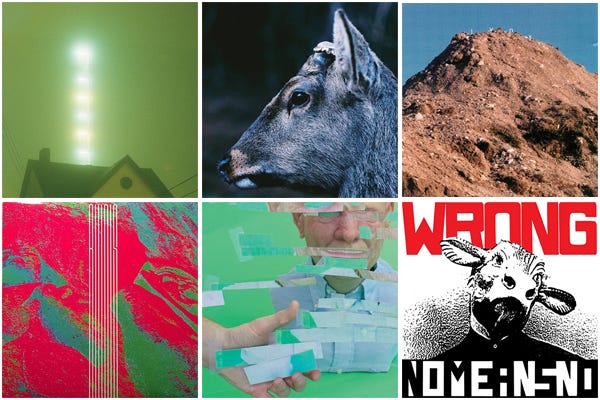
Much like emo, “math rock,” as both a concept and a term, is a can of worms.
Depending on the age — and regional and/or taste-based bias — of the person you’re polling, it can connote many different things, including but not limited to: tricky time signatures, your 5s, 7s, 9s and so on (hence the “math” part); a de-emphasis on conventional vocals, or no vocals at all; performances marked by idiosyncratic virtuosity; a chaotic feel; a polished feel; aggression; melancholy; hyperactivity; serenity; compositional intrigue; very short songs; very long songs; funny song titles.
Collections
Chris Catchpole on Conny Plank
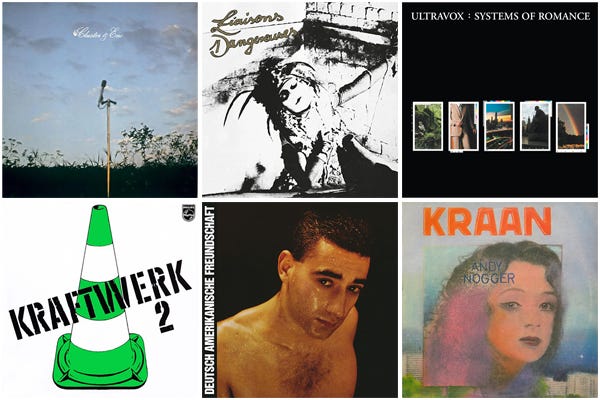
The core texts of krautrock and kosmische by Kraftwerk, Neu!, Cluster and Harmonia, through his later work shaping the sound of post-punk and electronic pop with records by the likes of D.A.F, Devo, Ultravox, Killing Joke and Eurythmics – they all have Plank’s sense of space; his driving, minimalist rhythms; and the creation of never-before-heard sounds that somehow manage to feel both thrillingly futuristic and at times charmingly homemade.
Ned Raggett on Robert Hampson
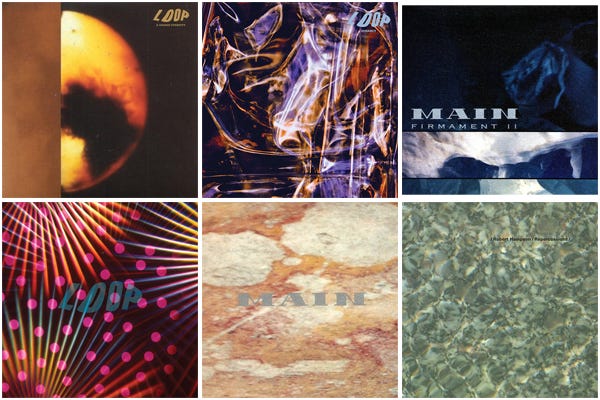
It’s not been a totally unique path, but there’s arguably been few musicians as remarkable when it comes to moving from rock and roll to the further reaches of experimental music over the years – and then finding ways to come back to the latter on their own terms while still pursuing that extreme vision – than English musician and composer Robert Hampson.
Joshua Levine on Proto-Punk
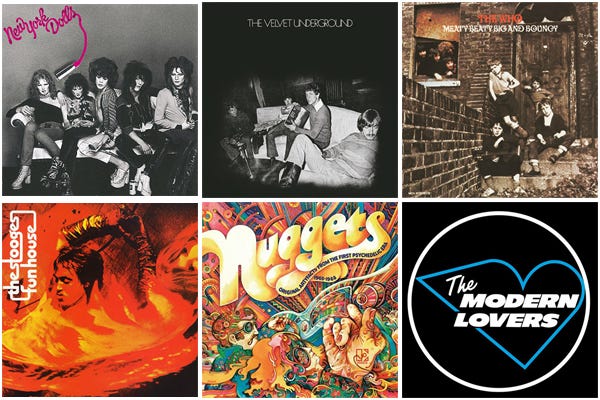
Musically, one of the consequences of punk was a reordering of the past. This meant that disparate strands of pop and rock music from pre-1976 were retrospectively canonized as forerunners of punk. At the dawn of punk in 1976, a Rolling Stone buyer’s guide listed The Velvet Underground as art rock (the same category as punk enemies like Pink Floyd or Genesis) and The Stooges as heavy metal. After 1976, there were attempts to shoehorn previously unconnected music from the past into a coherent lineage – proto-punk. An expansive view would include the most aggressive jump blues and rockabilly, but for the sake of an overview, proto-punk begins in the aftermath of the British Invasion on both sides of the Atlantic.
Reviews
Chris Catchpole

The Peter Peter Ivers Band / Terminal Love
Murdered in his LA home at the age of 36, Peter Ivers was ahead of his time on multiple fronts. A Harvard classics graduate, songwriter and performance artist (he supported Fleetwood Mac dressed in a nappy and squirted New York Dolls audiences with a phallic water pistol filled with milk), Peter Ivers was also a pioneering, leftfield television host (he gave Black Flag and Dead Kennedy’s early screen time), and regularly partied with John Belushi and David Lynch, composing In Heaven (The Lady In The Radiator Song) for Lynch’s Eraserhead, later covered by Pixies.
The Coral / 388
Despite losing founding whizzkid guitarist Bill Ryder-Jones after 2007’s Roots & Echoes, The Coral have been enjoying something of a creative rebirth in recent years, beginning with 2021’s conceptual double Coral Island. Initially secretly snuck into record shops on vinyl and named after the Tascam tape recorder it was made on, 388 sees them indulge their love of the reggae, dub and early rock’n’roll records the group initially bonded over as teenagers in the Wirral, outside Liverpool.
Panda Bear, Sonic Boom / A ? of WHEN
Formerly one half of Spacemen 3 alongside Spiritualized’s Jason Pierce, Pete ‘Sonic Boom’ Kember mixed Animal Collective singer Noah ‘Panda Bear’ Lennox’s 2011 solo album Tomboy before co-producing 2015’s Panda Bear Meets The Grim Reaper. Their space cadet meeting of minds fully came together, however, on 2022’s superb Reset, the pair using samples from Kember’s collection of old 50s and 60s 45s to fashion a retro-futuristic time machine to travel to an alternative past where Brian Wilson had called up Telstar producer Joe Meek to complete his psychedelic opus, Smile. Following Adrian Sherwood remix LP Reset In Dub in 2023, A ? Of WHEN is the pair’s follow-up proper.
Ned Raggett

Michael Cloud Duguay / Kingdom Come, Kingdom Go
When experimental music, as broadly conceived, is described as using old church organs, it would be easy to assume the emphasis could be on extended drone meditations. But there’s a different feeling to Michael Cloud Duguay’s 2026 album Kingdom Come, Kingdom Go, where said organs – seven all told, in various states of repair and upkeep, located around Newfoundland and recorded on site, in combination with general field recordings from those stops – form the basis of a striking variety of shorter songs created by Duguay and a wider ensemble of performers.
aja monet / the color of rain
The 2026 followup to aja monet’s previous album when the poems do what they do finds her gift at matching her spoken word poetry and reflection undiminished while also finding a new striking context thanks to her main musical collaborator: Meshell Ndegeocello, bringing her own deep skill to bear leading a group of musicians, in further combination with overall coproducer Justin Brown, to create another rich jazz-rooted listen in the color of rain.
G̱a̱mksimoon / Gyiin Na̱xnox
It might be glib to say that there’s any number of bands in the 21st century world that treat proto-metal, heavy metal itself and punk rock as essentially the same thing, but from a distance a lot of the seeming distances ultimately fall away. But what makes G̱a̱mksimoon’s debut album distinct beyond a general excellence at just that fusion is a thing both simple and profound: it’s sung entirely in the Canadian Pacific coast First Nation language Sm’algya̱x by its lead songwriter, vocalist and guitarist, Wil Uks Batsga G̱a̱laaw.
Rick Anderson

Goodbye, Babylon
It’s hard to imagine a more interesting, thorough, and informative overview of American gospel music than this. Consisting of six CDs and a 200-page book all packaged in a wooden box (alongside decorative cotton bolls), the original release caused something of a sensation when it came out in 2003. (Its content is now available from Dust to Digital’s Bandcamp page as a 1GB download.)
Barenaked Ladies / Gordon
Yes, the album featured some silly novelty songs like “If I Had $1,000,000” and “Be My Yoko Ono,” and the band was famous for equally silly onstage shenanigans, often involving boxes of macaroni and cheese – but Gordon also showed them to be remarkably talented musicians and, when they wanted to be, composers of serious and beautiful songs.
Beats International / Let Them Eat Bingo
After he stopped being the bass player for the Housemartins, but before he became an international club sensation as Fatboy Slim, Norman Cook helmed a glorious but short-lived experiment in cut-and-paste dance-funk under the name Beats International. Let Them Eat Bingo, the project’s first album, could serve as the basis for an entire academic course on copyright violation: uncredited samples, straight recreations of vintage (and familiar) melodies, basslines, and hooks, and unapologetic lyrical appropriation are all wielded in the service of bright, glossy, funky, and unbelievably fun dance music.
Megan Iacobini de Fazio

Walter Laureti / Variazioni D’Ambiente Vol. 1
Walter Laureti’s Variazioni d’Ambiente Vol. 1 is a deeply organic and immersive work, a record that feels less composed than somehow cultivated. Built from a series of “musical atlases” — tape-recorded sound environments that are later reshaped through sampling and live manipulation — the album creates a space where acoustic instruments, field recordings and electronics constantly bleed into one another. Across four movements, tiny details emerge and disappear: a frequency comes into focus while others recede and layers drift past like underwater currents.
Devon Rexi, John T. Gast / Breathstep
Amsterdam collective Devon Rexi occupy a strange, feverish space between dub, post-punk, and psychedelic funk, drawing on the loose but intense energy of No Wave, and folding in distorted vocals, turntablism, and elastic rhythms. On the delightfully weird Breathstep, they join forces with London producer John T. Gast, whose dub-rooted production techniques pull their already unruly sound into a deeper, more immersive space.
Maral / Mahur Club
Known for exploring the space between Iranian musical traditions and experimental club music, building a sound where folk recordings, heavy bass and electronic production exist in constant dialogue, on Mahur Club Maral pairs distorted bitcrushed melodies, warped instrumental samples and vocal snippets with familiar dance-floor rhythms, from reggaeton to dub, in a way that sounds messy and sometimes a little dissonant, but immediately absorbing.