
Rick Anderson on Recomposition
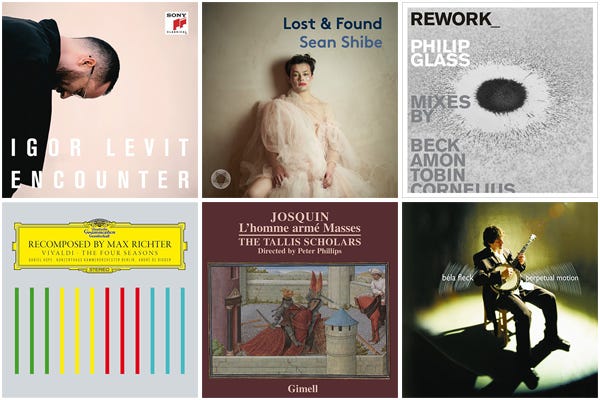
We live in a time when originality is taken for granted as a prime virtue of artistic expression, in music as well as in most other art forms. But this hasn’t always been the case. In earlier centuries, composers were celebrated and rewarded more for working effectively within the confines of clearly laid-out stylistic conventions than for breaching those conventions, or even for coming up with and developing new musical ideas. It’s also true that for centuries, music was created more for functional purposes than as a vehicle for self-expression: composers of the Renaissance, baroque, and classical periods were often hired by chapels and cathedrals to create music suitable for worship; others were hired by kings and dukes to write music designed to celebrate their patrons or entertain their guests at events.
Collections
Amelia Riggs on Witch House
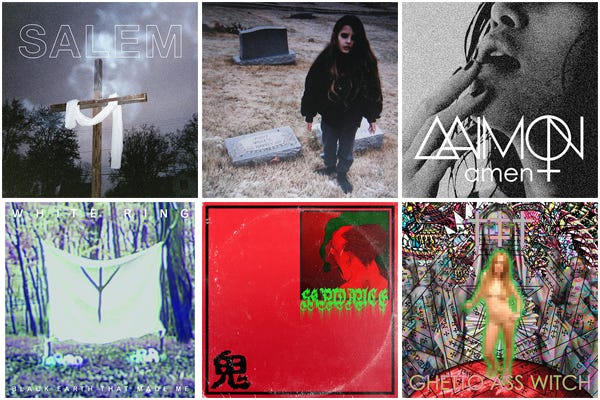
No one is saying you gotta rush to wherever you buy incense and stock up on sage. Nor is anyone saying cloaks are required before pressing Play. But as a subgenre Witch house is pretty All The Way In or Not At All; lasting either eternally or between 2000 and 2013 (depending on which forums you creep on), Witch house scrapes up elements of ambient, goth rock, trance, and industrial and sews them all together into something as brooding as it is engaging.
Joshua Levine on Electroclash
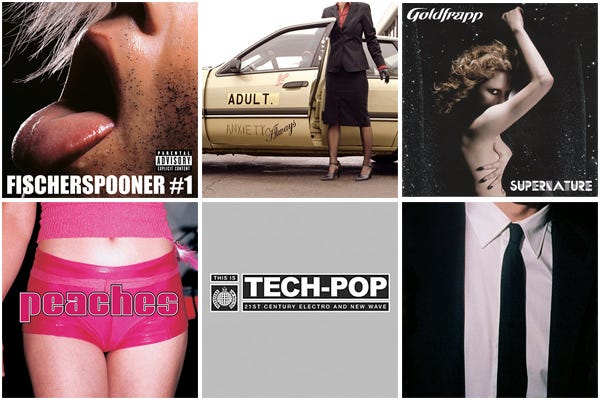
The turn of the 21st century was marked by a back-to-basics approach in popular music. The Strokes and the The White Stripes stripped rock music of its late-90s excesses, the Yeah Yeah Yeahs and The Rapture brought movement and urgency back to indie rock, and electroclash sought the same ends with electronic dance music. After years of bloated, anonymous trance music, corporate sponsorships of artists and events and the dominance of bro-filled superclubs, electroclash turned the clock back to techno’s roots to bring some sex, danger and sleaze back to clubland.
Shy Thompson on Shibuya-kei
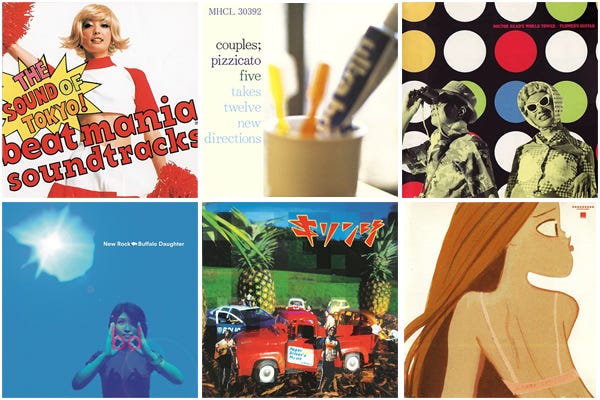
Shibuya-kei is most definable by its difficulty in pinning down its hallmarks. It’s retro-futurist, yet doesn’t agree on a past or a future it should most resemble. It’s a confluence of styles — Brazilian bossa nova, dub reggae, ’60s psych and folk rock, American hip-hop, French chanson, and more — but rarely do all these influences appear at once, or in predictable permutations. As an active art movement, it lasted a relatively short period from the late ’80s through the ’90s, yet left an indelible mark on the landscape of Japanese pop.
Reviews
Shy Clara Thompson

Emma Aibara — U:phobia
Emma Aibara exists halfway between Los Angeles and Tokyo and so does her music. Occasionally a resident of cities on the Eastern and Western hemispheres (currently, she’s based in Tokyo), she embodies the current trends of Japan’s emergent internet music scene in equal measure to Y2K pop-rock of yesteryear from the United States.
Telematic Visions — Opposite Mirrors
Since about 2019, Telematic Visions has been making club music and playing live houses all over Tokyo. Starting mostly as straightforward techno, his compositions gradually became more knotty and complex, morphing into longer grooves with labyrinthine structures as he welcomed more possibilities to his process.
Baa Records Selects: Thailand’s Golden Sounds
It might sometimes feel like western music nerds are interested in Asian music, but the fascination generally stops with East Asia, particularly Japan and Korea (and China, to an extent). Southeast Asia remains woefully underrepresented, even as resources for understanding the region’s creative output are more accessible than ever. It’s not a surprise to me that Baa Records Selects — a compilation of early synth and disco songs from the ’80s — barely made a blip on anyone’s radar when it was released in mid 2025, but it is a shame.
Hank Shteamer

Dianogah — As Seen From Above
If raucous crushers like the Jesus Lizard and Shellac represented one extreme of Chicago’s sprawling ’90s underground, and tasteful sophisticates such as the Sea and Cake and Tortoise the other, Dianogah fell right in the center of that pack. A largely instrumental trio made up of two bassists — Jason Harvey and Jay Ryan, the latter also known as an accomplished poster artist — and drummer Kip McCabe, the band put a more approachable spin on the elliptical post-hardcore stylings of bands like Slint and Bitch Magnet.
Jim White — Inner Day
Inner Day is actually even less drum-centric than its predecessor, 2024’s All Hits: Memories. Built around gentle synth tones and pulsations, it casts White’s drums in a subtle and coloristic role, such as on “Cloudy,” where a faint bass drum pulse and a gentle roll on the kit’s metal edges produce a pleasingly trancelike effect.
Cro-Mags — Alpha Omega
By the early ’90s, New York hardcore was evolving in potent new directions thanks to newly formed bands such as Into Another, Quicksand and Life of Agony. But the old guard were also pushing ahead into fresh territory, yielding bizarre and largely forgotten oddities like the third LP from Cro-Mags.
Harold Heath

Sault — 10
In their short history, UK collective Sault have made soul, funk, afro, R’n’B, hip hop, post-punk, no-wave, garage rock, celestial-transcendental-psychedelic gospel and more. For 10 (contrarily, their 13th album), they’ve mainly stuck to the live-sounding, uplifting classic-soul/funk and contemporary afro beats/R’n’B hybrid end of their repertoire.
Hollie Cook — Shy Girl
The songs are all characterised by sweet soul chord changes, and lilting, light, but often heart-wrenching vocal melodies from Cook, with the various tempos, styles and rhythms of reggae and dub re-worked into a highly listenable, bittersweet yet heavy-duty album.
Yazmin Lacey — Teal Dreams
Teal Dreams is a cohesive, accomplished set of storytelling soul/R’n’B and gently skanking Lovers Rock, with added afro beats and occasional forays into highly accessible pop-ish territory. As a singer, Yazmin Lacey generally eschews melisma or showy vocal acrobatics in favour of close-up, intimate performances using her bewitching, honeyed tone, a soft, tender, just-slightly-grainy voice that delivers her clever, introspective and authentic lyrics, that in this case tell the story of a relationship from beginning to end over the course of the album.
Chris Catchpole

The Milk — Borderlands
While with 2015’s Favourite Worry The Milk produced an enjoyable burst of retro-tinged blue-eyed soul, there weren’t many clues that the Essex four-piece had as remarkable a record as 2025’s Borderlands in them. When not working with the band drummer Mitch Ayling runs his own studio, and his cornucopia of analogue gear and address book of ace session players help realise a grand, widescreen vision filled with reflections of David Axelrod, Curtis Mayfield and Brian Wilson.
Doves — Constellations for the Lonely
Soaring from the sci-fi visions of Blade Runner-inspired opener “Renegades” to “Last Year’s Man”’s poignant, Smith-referencing reflections on parenthood, and the bombastic, almost Queen-like showdown of closer “Southern Bell,” it might actually be one of the trio’s finest records yet.
Sven Wunder — Daybreak
Given Danell’s meticulous attention to detail, the warm analogue glow of the recordings, and the fulsome splendour of the strings (performed by the Stockholm Studio Orchestra and conducted by Erik Arvinder), it’s hard to believe Daybreak isn’t some long-lost gem from the turn of the 70s.
Joshua Levine

Dogs — Different
The Dogs, from Rouen, crucially sang in English and used punk as a springboard to a laudable career and a source of national pride. Different was the trio’s debut and most aggressive effort. Drawing on early rock and roll, soul and proto-punk, the album is one of the stronger efforts of punk’s late-’70s second wave.
Primal Scream — Evil Heat
In many ways, Evil Heat is a simplified sibling to its monolithic predecessor, 2000’s XTRMNTR. It was recorded around the time that The Strokes and electroclash emerged, and it uses a similar back-to-basics approach.
Primal Scream — XTRMNTR
The Glaswegian pop/rock/dance experimentalists entered the new century with yet another musical reinvention (they had drastically changed directions on almost every one of their previous five albums) with their most scabrous album yet. XTRMNTR was apparently made in a period of sobriety for the band, and the lyrics capture the shock and bald-faced outrage at the capitalist politics of people for whom the anesthesia has worn off.