
I know we’re a bit late this month (this was supposed to be March!) and we may be a bit late next month too, but things should even out after that.
Harold Heath on Kudu
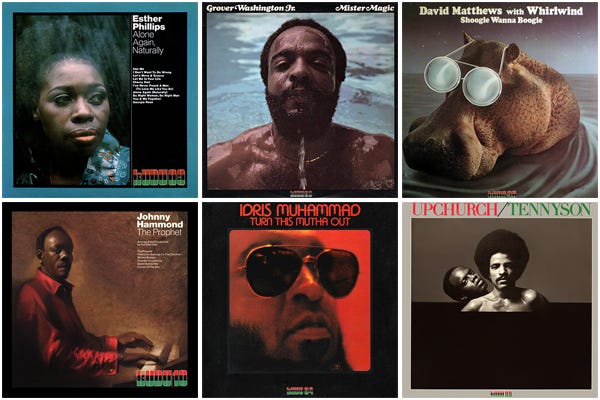
Established in the summer of 1971, the Kudu label was intended to release soul jazz, an accessible, danceable jazz sub-genre that incorporated R’n’B/soul rhythms, was often played by small organ combos, and which had developed in the preceding two decades. Taylor’s Kudu enlisted a stellar revolving door lineup of superlative house musicians, including Ron Carter, Airto Moreia, Richard Tee, Lonnie Smith, and Bernard Purdie, many of whom would also release solo albums for the label. The primary arranger was the legendary Bob James, while Taylor oversaw the production. With a roster of established artists like Hank Crawford and Grant Green, and newer talent like Grover Washington Jr., Kudu continued in the soul jazz tradition of easy-going dancefloor-targeted jazz music, while further developing the sound to their own particular distinctive style, making a number of creative decisions to maximise crossover success for their releases.
Collections
Jon Dale on Giacinto Scelsi
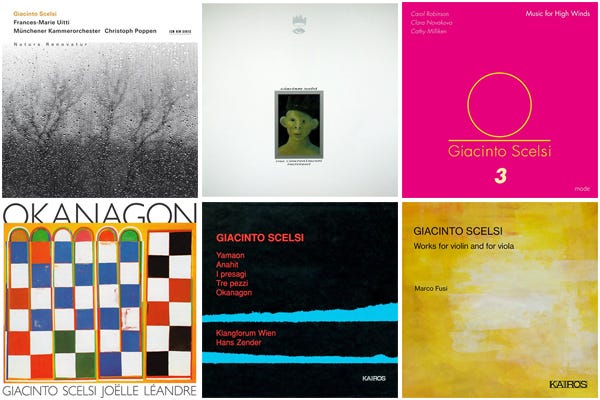
“How on earth did he get from all those notes to just one note?” This was composer Morton Feldman’s quip after attending a 1986 performance of piano works by Italian polymath Giacinto Scelsi. It’s a typical Feldman line in that its humour and counterfeit astonishment covers for a perceptive recognition of the way Scelsi’s music changed over time – Scelsi stopped making work for piano in the mid-fifties, after all, though he would continue to write for other instruments until his passing in the late 1980s. But it also tells us much about the aesthetic of this quixotic artist, and his fixation on ‘music of one note’; his desire to tease out the myriad microtonal and miniscule inflections found within that one note. Few have been quite so dedicated to quite such a focused zone of creation.
Joshua Levine on The Rock and Roll Revival of the Aughts
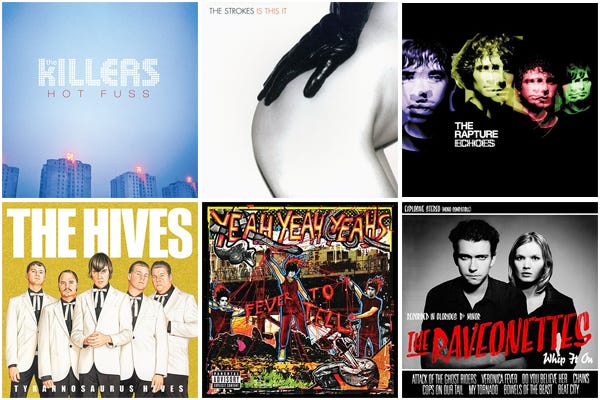
The recordings were relatively lofi, the songs were based on 1960s garage rock, 70s punk, 80s new wave and 90s Britpop, four genres that were not represented in commercial U.S. alternative rock, which at the time was aggro, in conversation with metal, sexless and angry or depressed. Along with dance-punk and electroclash, the rock and roll revival formed the core of a back-to-basics movement that shifted the underground towards hedonism and excitement in the aftermath of 9/11.
Reviews
Ned Raggett

Kin / KMRU
Originally conceived as a new album for the famed Editions Mego label following the excellent 2020 album Peel, Kin fully surfaced on that imprint some years after the passing of its founder Peter Rehberg. Most important of all, though, is simply that it’s another in the series of remarkable albums by KMRU, showcasing his abilities with exploratory electronic art and possibility.
Seefeel / Sol.Hz
While various shorter Seefeel efforts emerged during the early 2020s, 2026’s Sol.Hz was the first full album from them in a decade and a half, a notable enough moment in the story of the now-veteran band.
Marielle V Jakobsons / The Patterns Lost to Air
Marielle V Jakobsons has been so known and productive with her collaborative and guest work, especially her long-running partnership with Chuck Johnson, that it’s almost a surprise to realize she’s released only a few full solo albums over the years.
Chris Catchpole

White Fence / White Fence
After leading LA psych band Darker My Love for two albums in the early 2000s and having been drafted in to join The Fall after Mark E. Smith sacked half his band mid-way through a US tour, singer and guitarist Tim Presley locked himself away with only a four-track tape recorder and his cat for company, amassing hundreds of recordings that would form the basis of his first album under the White Fence banner.
VA / High in a Basement
By the mid-1990s, the countercultural movement that had sprung up around acid house and outdoor raves had crossed over into a more corporate world of superstar DJs and megaclubs. Compiled by Sally Rodgers, one half of acid jazz/Balearic house pioneers A Man Called Adam, High in a Basement captured an alternative, and far more interesting scene to be found at more intimate, innovative club nights across London in places like Blue Note, Plastic People and Space.
Ike White / Changin’ Times
As captured in 2020 documentary The Changin’ Times of Ike White, the story behind White’s sole album, 1976’s Changin’ Times, is the stuff of a screenwriter’s dream. Jailed for murder aged 19, he spent his time in prison writing songs (while incarcerated at San Quentin, he reportedly used the gas chamber as a rehearsal space) before being discovered by producer Jerry Goldstein, who negotiated with the authorities to allow White to record an LP in prison.
Rick Anderson

Pat Metheny & John Scofield / I Can See Your House from Here
What makes this summit meeting by two lions of contemporary jazz guitar a delight is not just the fact that both of them are consummate masters; it’s the unusual blend of similarities and differences that they bring to the table.
Teddy Thompson / Teddy Thompson
It’s singer-songwriter Teddy Thompson’s unenviable fate that every article and review about him is going to lead with the fact that his parents are the British folk-rock legends Richard and Lida Thompson. (See?) On the other hand, we can all envy both the talent he inherited from them and – more importantly – both the quantity and the quality of the music he has created with that talent. He’s not a pyrotechnical guitar innovator like his dad, and his voice isn’t one of the seven wonders of the world like his mom’s.
Daniel-Ben Pienaar / Pavans & Galliards; Variations & Grounds
Pinaar’s approach to these works is not just respectful, and not just informed by an understanding of period approaches to articulation and ornamentation – it’s also innovative and quite personal.